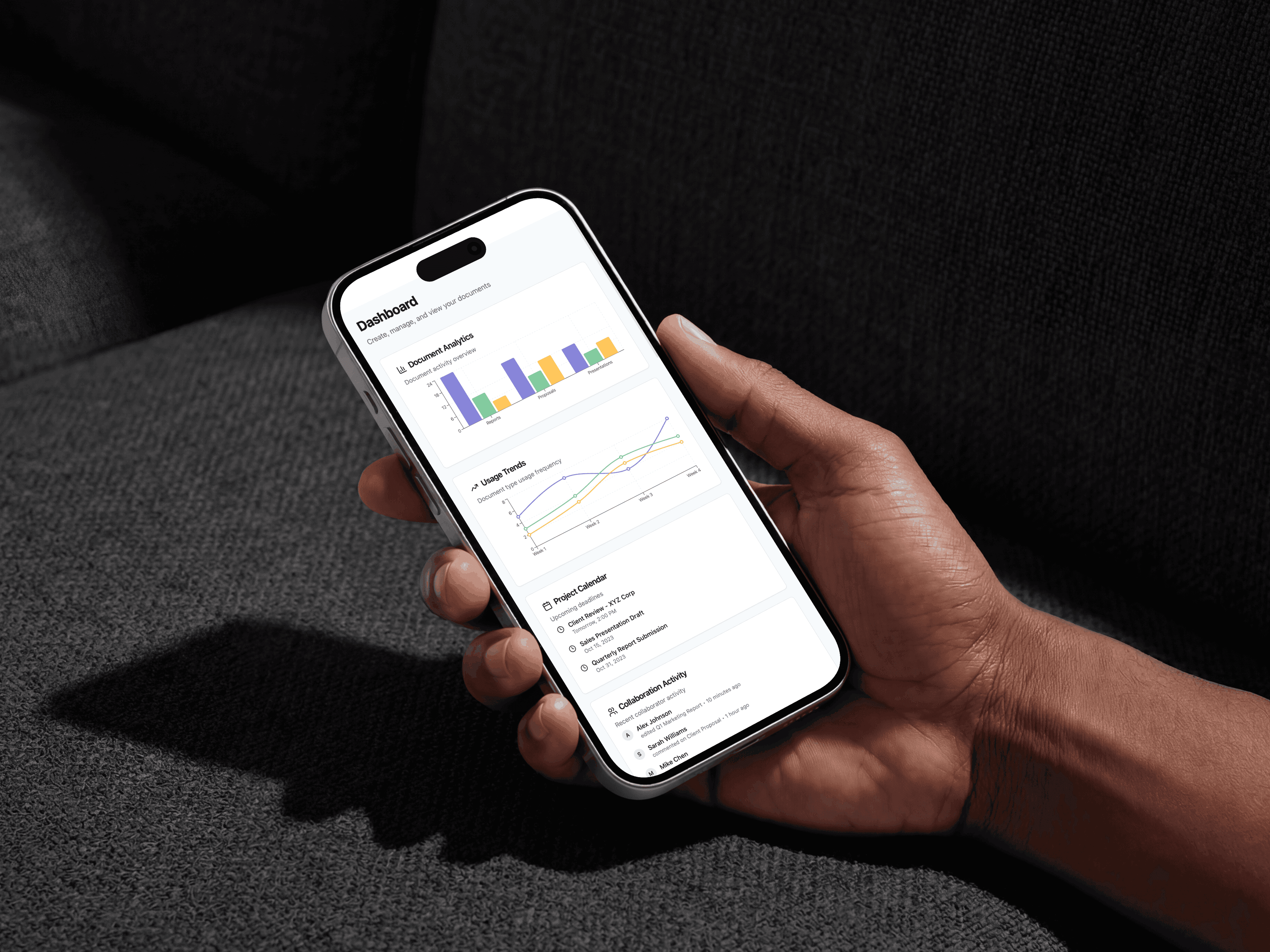
Generating a weekly report turned out to be the easy half. What happens in the twenty minutes after the draft appears is where the design problem actually lives.
Syynth is a reporting platform for strategy and ops teams. The job it targets is the one that sits between a dashboard and a decision: somebody has to read the charts and write the summary that gets sent upward. That summary is where the value is, and it is also the part nobody wants to do on a Friday afternoon.
The obvious product is a button that writes it for you. I built toward that and found the interesting problem sitting just past it. A draft is not an outcome. Somebody still has to make it true, make it theirs, and take responsibility for it in front of a leadership team.
The Wall of Text: The first version returned a report the way a chat assistant returns an answer. One continuous block, correct in substance, unusable in practice. A report is a document with parts, and parts are what people work on.
Ownership Anxiety: Anyone sending a generated summary under their own name is going to reread every line of it. If the interface makes that reread slow, the time saved by generating it is handed straight back.
No Line Back to the Data: A sentence claiming revenue softened in the second half came from somewhere in the analytics. The draft showed the claim and hid the source, which is the one thing a reviewer needs to check it.

A chat response and a report are different objects
Chat output is designed to be read once, top to bottom, and then replaced by the next message. A report is designed to be revised, argued over, partially rewritten and sent. Those are opposite lifecycles, and the first build had borrowed the wrong one because it is the default shape that generated text arrives in.
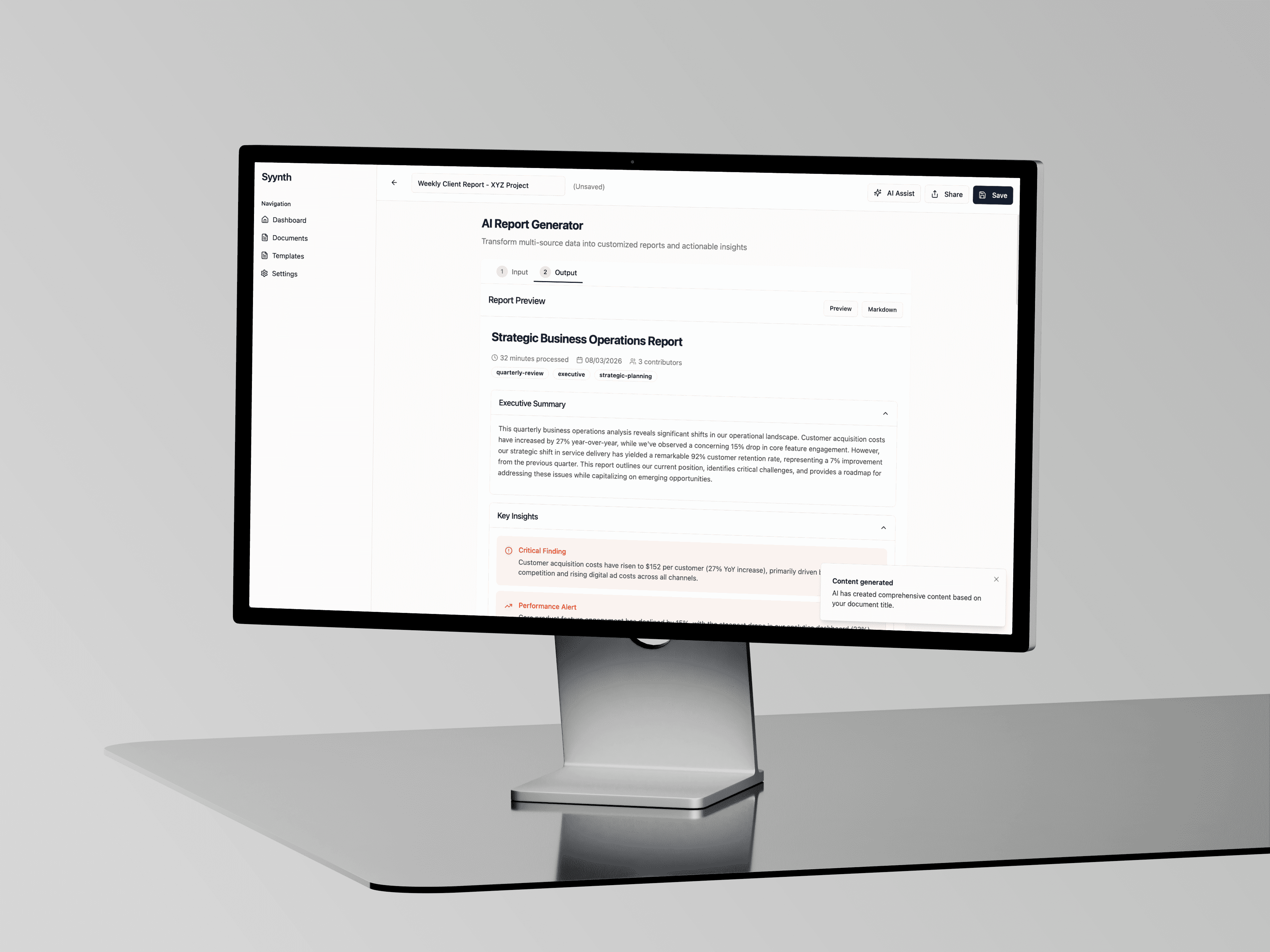
The fix was structural. The document editor breaks a generated report into named sections, Executive Summary, Key Insights, and so on, each inside a collapsible accordion. Collapsed by default, expanded when worked on.
That solved the reading problem. A multi-page generated document stops being intimidating when you can see its skeleton in one screen and open only the part you care about.
It did not solve the editing problem
Progressive disclosure makes a long document navigable. It does nothing about the actual work, which is reshaping prose somebody else wrote.
Editing generated text is a specific and under-designed task. You are not writing from nothing, so the blank page is gone, but you are also not editing your own draft, where you remember the intent behind every sentence. You are reverse-engineering an argument you did not make, deciding which parts you believe, and rewriting the rest in your own register. Most tools treat that as ordinary word processing. It is closer to reviewing a junior analyst's work, and the interface should behave like a review surface rather than a text box.
The version I designed puts the AI assistant in a split-screen sidebar so the draft and the suggestions stay visible together, which keeps the reviewer from losing their place. That is a partial answer. The full one would let a section be regenerated on its own, with a different instruction, without disturbing the sections around it that have already been approved.
The section is the unit of work, not the document
Once the report was structured into sections, the natural unit of everything else followed. Approval belongs at section level, because a reviewer trusts the summary and doubts the forecast. Regeneration belongs at section level, for the same reason. Provenance does too: the question is never where did this report come from, it is where did this claim come from.
That reframing is the design idea I would carry into any generative writing tool. The document is the delivery format. The section is what people actually think about, so it should be the thing the interface lets them act on.
What I would build next, and what I have no evidence for
The gap I would close first is the line from claim to chart. Every generated sentence should be traceable to the data that produced it, visible on hover or on click, so a reviewer can check a number without leaving the paragraph. Without that, the reviewer either trusts the draft or rebuilds it, and both of those are failures.
The honest status: Syynth is designed, not built. The flows and the interface exist and nothing runs behind them, so the authoring layer described here has never produced a real report from real data. The accordion structure and the section-level model are reasoned from how the work is done, not from watching anyone do it in this tool. That is the part I would want in front of an actual ops lead on an actual Friday afternoon before I claimed any of it was solved.