A founder scoping their first app does not leave out user authentication because they weighed it up and decided against it. They leave it out because it never came up.
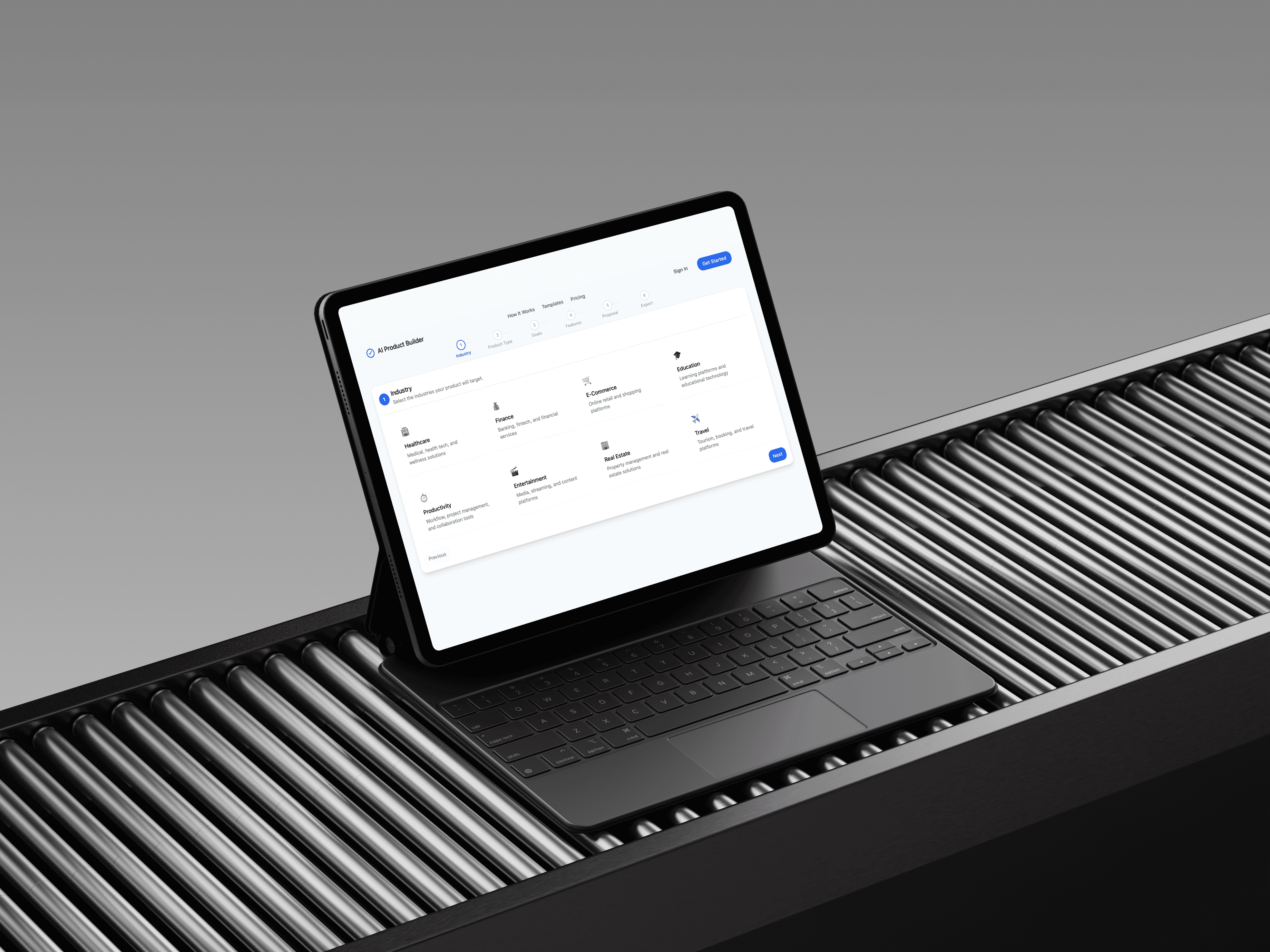
AI Product Builder turns a vague product idea into a structured requirements document. The user is typically non-technical: a founder with a clear picture of what their product does for a customer and no picture at all of what it takes to build.
The obvious framing is that these people need help writing things down. That framing produces a better form. The real problem is that the document they produce is incomplete in ways they cannot detect, and every gap in it becomes an argument with a development team three months later.
The Omission Problem: You cannot ask for what you do not know exists. Roles and permissions, audit trails, password reset, data retention, none of these occur to someone describing the product they imagined.
Scope Creep Is a Late Invoice for an Early Silence: Most of what gets called changing requirements is requirements that were never captured. The cost lands on whoever is building, months after the conversation that should have surfaced it.
Confident Vagueness: A brief that says the app will have user accounts feels specific to the person who wrote it and means at least six different things to the person quoting it.
The open prompt fails the exact person it is for
The first version opened with a text field and an instruction to describe the app you want to build. It is the obvious starting point for an AI tool and it was the wrong one for a specific reason.
The quality of what comes out of an open prompt depends entirely on the expertise of whoever writes it. Somebody who has shipped four products writes a rich description that mentions edge cases, because they have been burned by edge cases. Somebody scoping their first product writes two paragraphs about the happy path. The tool then produces a requirements document for the happy path, formatted well enough to look finished.
Which means an open prompt works best for the user who least needs the tool, and produces its worst output for the user it was built for. That inversion is the whole argument for structure.
The interview moves the expertise from the user to the system
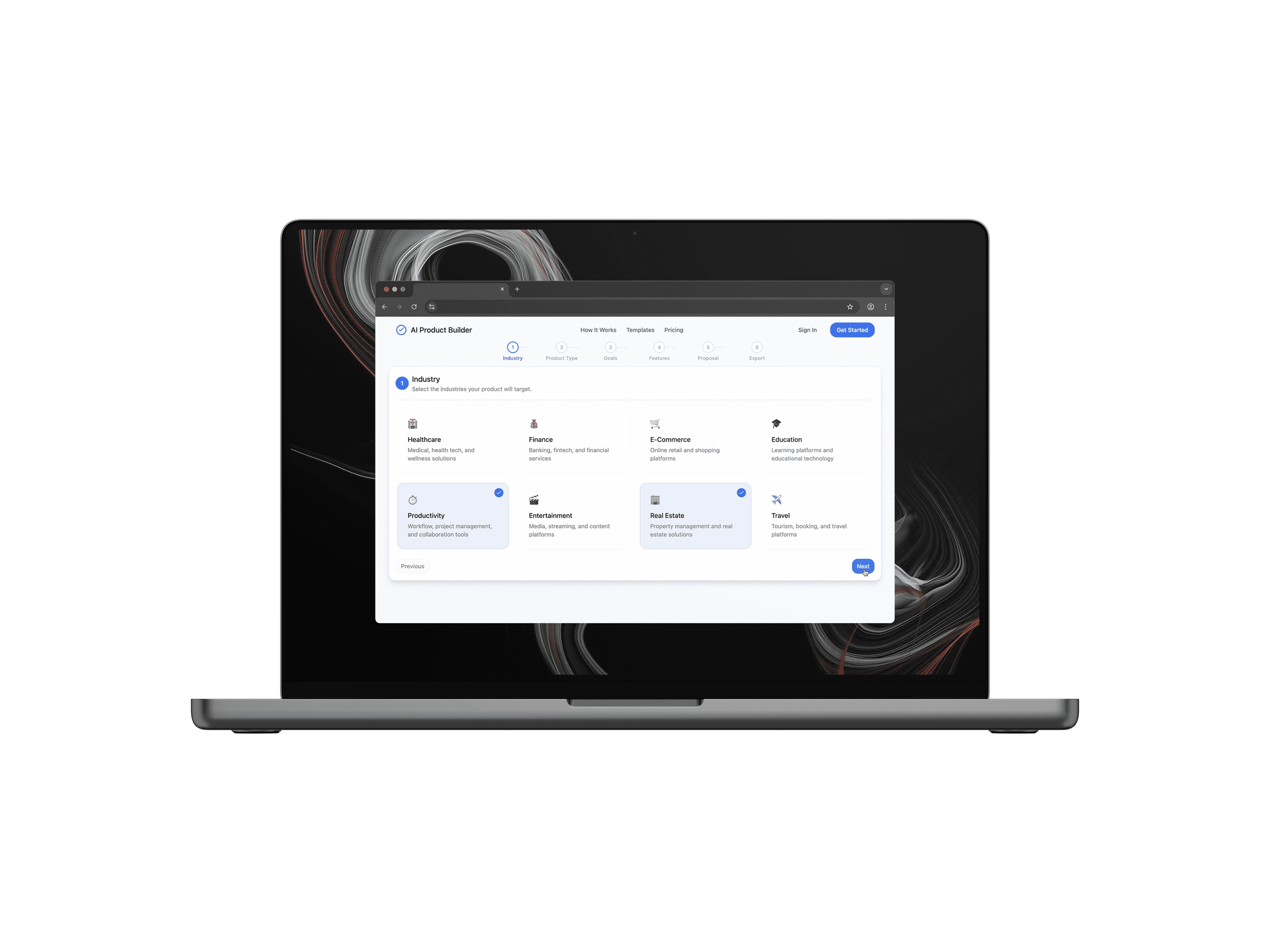
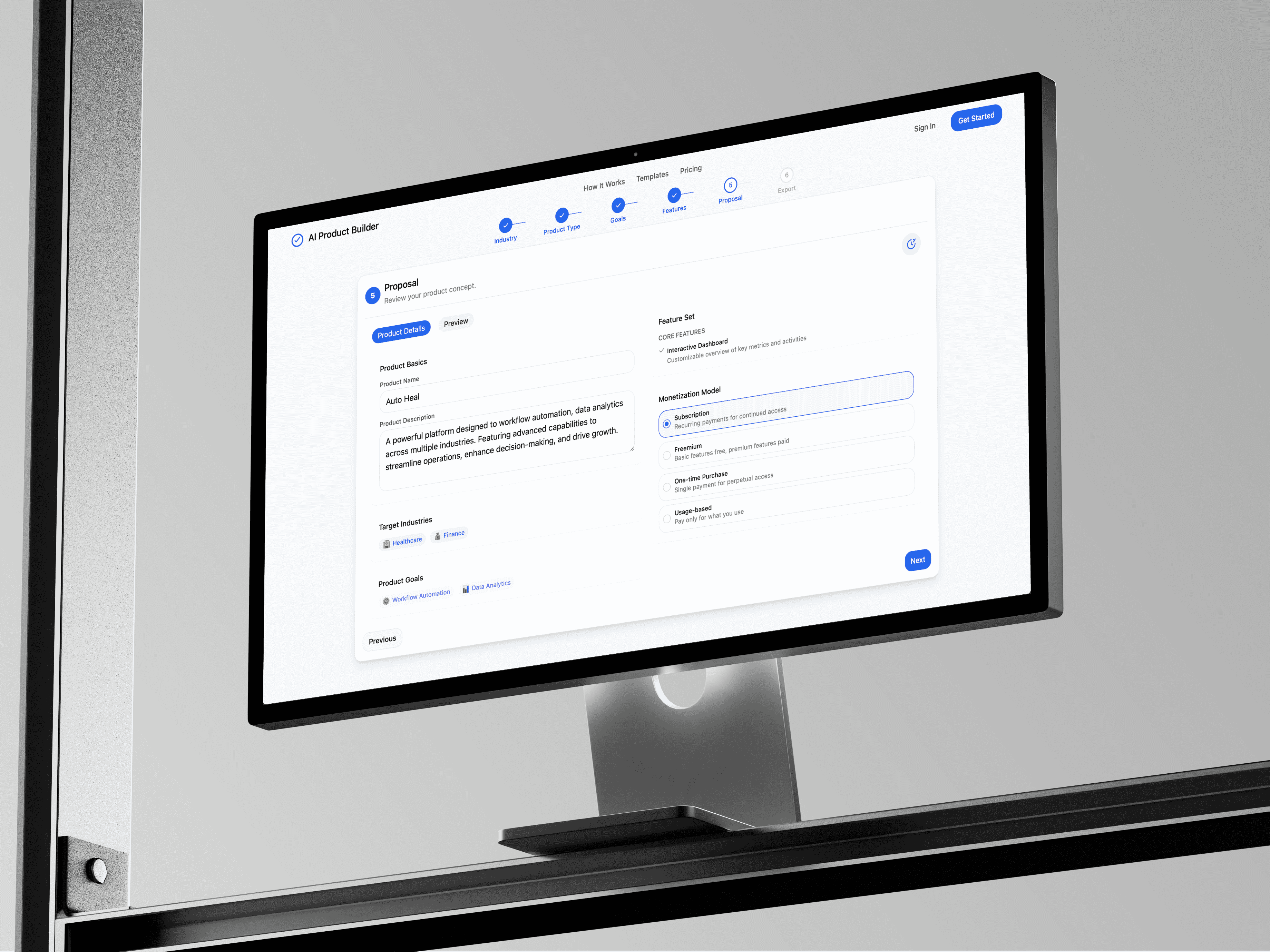
The version I designed replaces the prompt with a six-step interview. The system asks; the founder answers. That flips who is responsible for knowing what matters.
The value is not the questions the founder was always going to answer. It is the ones they would never have raised. Asking who else needs access to this, and what should they not be able to see, produces a roles-and-permissions section from someone who had not considered that there would be more than one kind of user. Asking what happens when this fails produces error states. The user supplies domain knowledge about their business. The system supplies the memory of what software needs.
A useful test for a tool like this: does the output contain anything the user could not have written on their own? If not, it has formatted their assumptions rather than improved them.
Six steps buys momentum with flexibility, and that is a real cost
The interview is a strict linear sequence. One question at a time, no branching visible to the user, no skipping ahead. That keeps a nervous first-timer moving and stops the process turning into a settings screen.
It also removes control from anyone who knows what they are doing. An experienced product manager using this would want to answer three questions, ignore two, and write their own section for the sixth. The linear wizard tells them no. I made that trade knowingly and I do not have evidence for it. It is the first thing I would test, because the failure it produces is quiet: an experienced user does not complain, they just stop using the tool.
Where this leaves the design
The principle I would carry forward is that a scoping tool is measured by what it adds, not by what it captures. Anything that only records what the user already knew has moved their assumptions into a neater container.
The honest status: this is a self-initiated concept that never left the design stage. Nothing was built, nothing deployed, and the requirements document that would be the product's entire output has never been generated, let alone handed to a development team who could tell me whether it was any good. The claim that the interview surfaces omissions is the load-bearing one, and it is exactly the claim that needs a real founder and a real build quote to test.