Syynth

Syynth

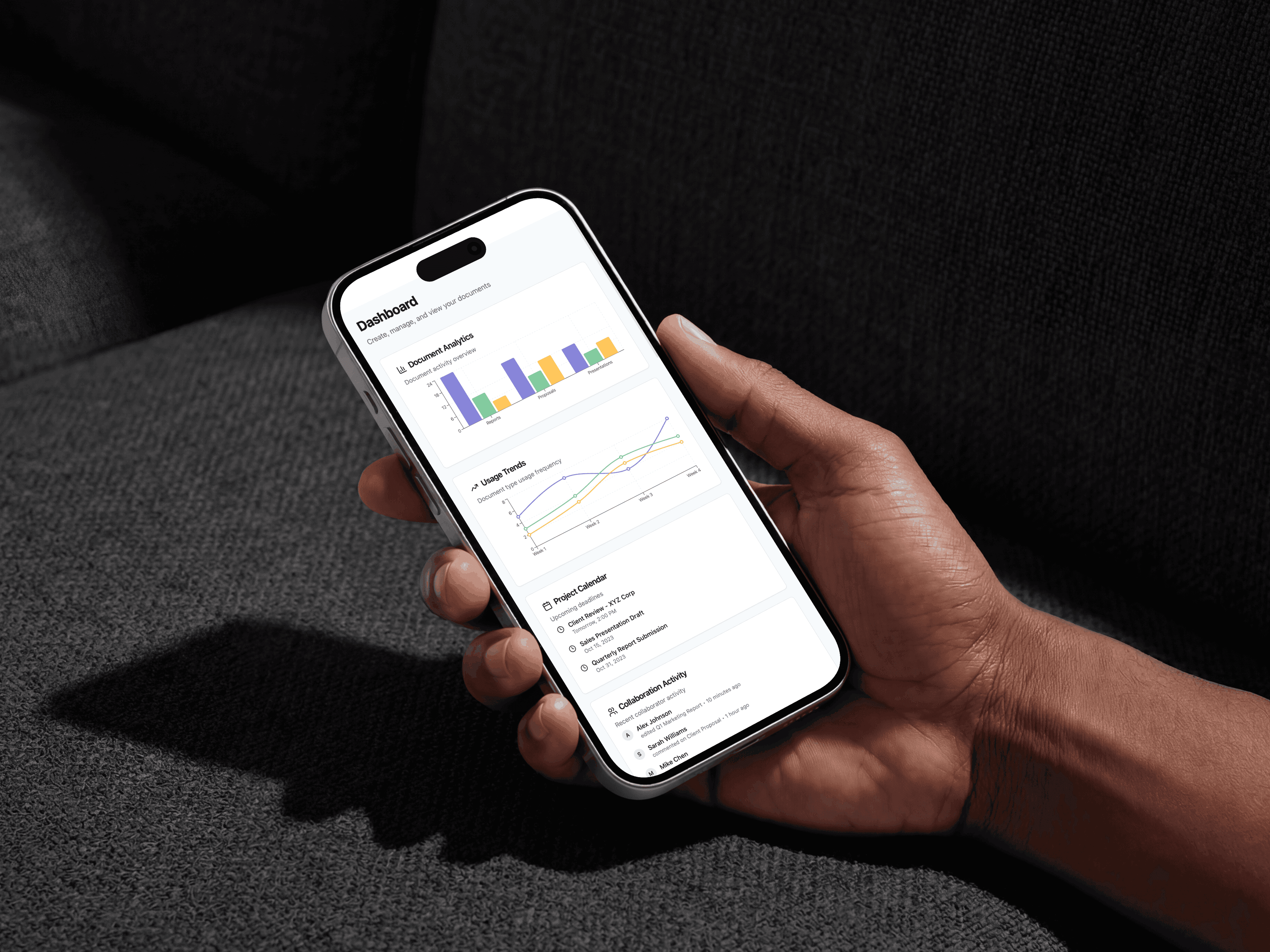
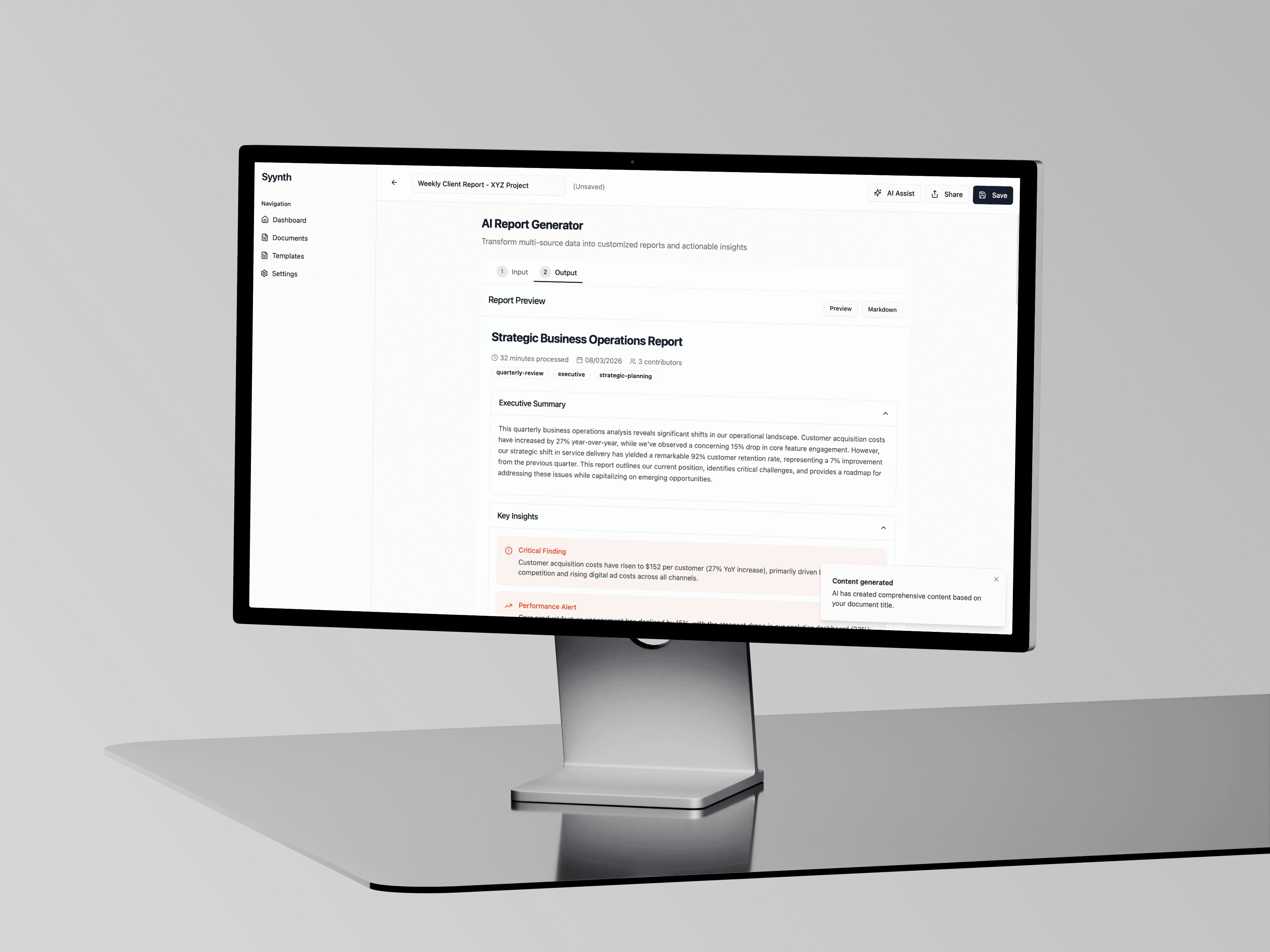
Syynth is an intelligent document generation and analytics platform designed for strategy and operations teams. By combining a macro-level analytics dashboard with a proactive AI authoring engine, the platform enables professionals to instantly transform raw business data into structured, highly formatted reports complete with automatically extracted, categorised insights.

Year

Scope

Timeline

Live project

The Challenge & Insights Gathering

Creating a platform that produces high-level strategic documents required understanding the friction points of traditional business reporting. Discovery Workshops & Stakeholder Interviews We audited the weekly workflows of strategy directors and operations managers. A critical bottleneck was identified: teams were spending hours staring at analytics dashboards, manually extracting data, and formatting it into static weekly reports, often missing the "so what?" in the process. The objective became engineering a workspace that doesn't just format text, but actually acts as a junior analyst—reading the underlying data and proactively surfacing the critical narratives before the user even begins to type.

Defining the Ecosystem: Personas & Roles

To structure the complex relationship between analytics, document generation, and team collaboration, we defined three core user archetypes.

Julian Vance

Senior ML Engineer

Diagnoses complex agent failures and optimises reasoning loops.

Trace Observability

Prompt Engineering

Latency Optimisation

Elena Rodriguez

Compliance Specialist

Audits autonomous outputs for accuracy and redlines hallucinations.

Redlining Logic

HITL Verification

Domain Alignment

Marta Chen

Head of AI Strategy

Benchmarks models in the Arena to ensure operational reliability.

Model Benchmarking

KPI Monitoring

Token Unit Economics

Iteration & Strategic Pivoting

During the initial wireframing phase, the AI generation tool functioned much like a standard chat interface—the user provided a prompt, and the AI returned a wall of text. Early conceptual testing with senior analysts revealed a critical lack of utility.

Mapping the User Flows

To manage the transition from high-level oversight to granular document editing, we mapped fluid user journeys that kept the user in a state of continuous flow.

Interface Solutions & Accessibility

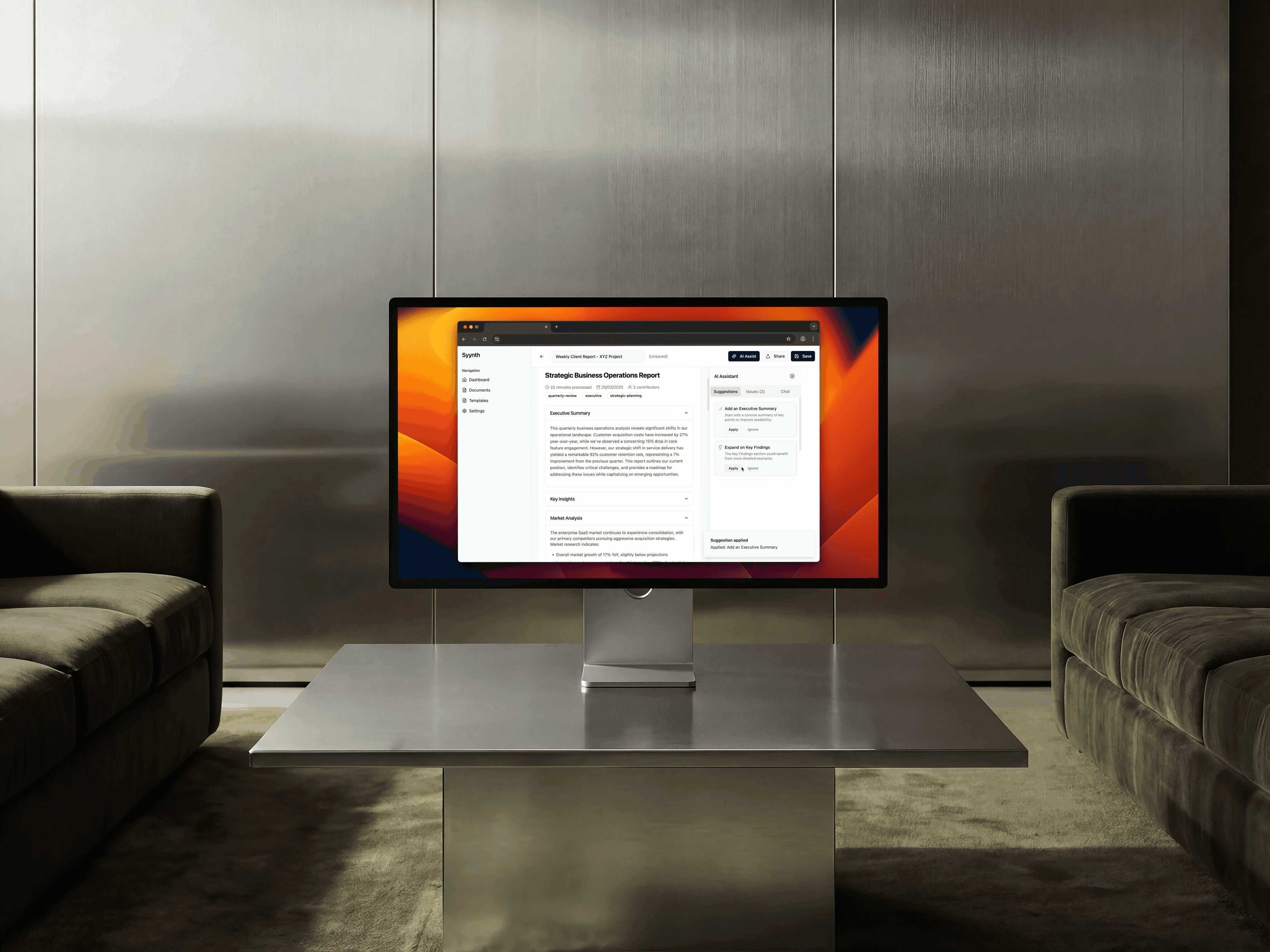
Reviewing dense strategic data inherently causes cognitive fatigue. The interface required a layout that aggressively chunked information. Designing for Rapid Scanning The document editor utilises extreme progressive disclosure. By placing sections like "Executive Summary" and "Key Insights" inside collapsible accordions, the user is protected from visual overwhelm when the AI generates a multi-page report. The split-screen layout used for the AI Assistant sidebar ensures that the user never loses context of the main document while reviewing the AI's structural suggestions.

More projects.

Have a project?

We’d love to hear from you — whether you have a project in mind, or just want to say hi.